



Cryptocurrency transactions in online poker involve multiple fee layers that aren’t always visible upfront. Network fees, platform charges, conversion spreads, and timing-related costs can reduce deposit amounts by 2-8% depending on conditions and user decisions. Understanding where fees originate and how they compound is critical for protecting your bankroll.
These fees exist at different protocol and application layers. Blockchain networks charge transaction fees to miners or validators for processing transfers. Exchanges add spreads when converting between cryptocurrencies or fiat. Payment processors may include intermediary fees. Sites sometimes charge withdrawal processing fees. Each layer operates independently, creating cumulative costs that casual users often overlook until after completing transactions.
This guide breaks down every fee category you’ll encounter, explains the technical mechanisms behind each cost, and provides operational strategies professional players use to minimize expenses without sacrificing deposit speed or security.
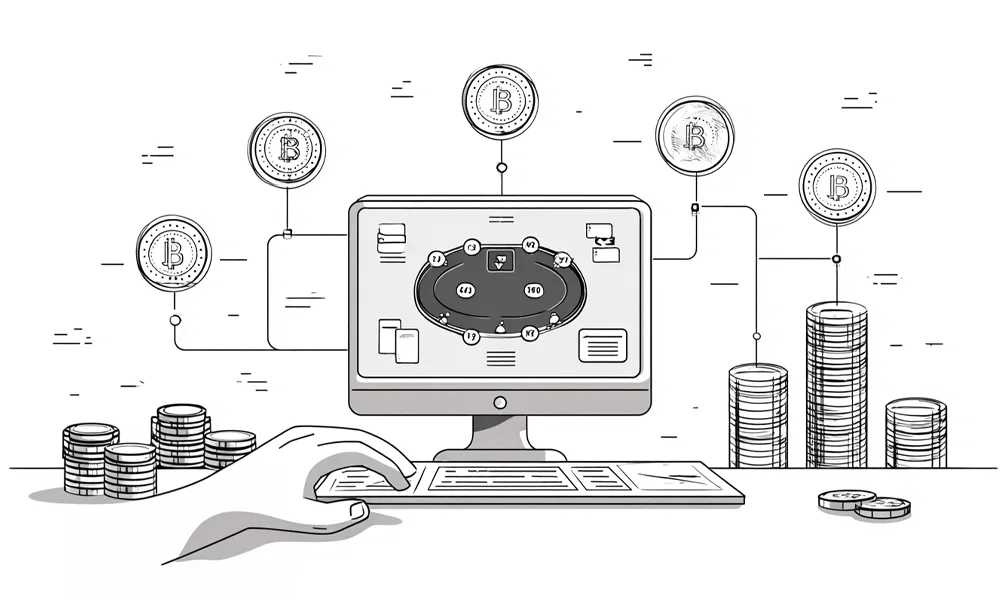
Understanding the Complete Fee Structure
Crypto poker fees originate from three distinct systems: blockchain networks, intermediary services, and poker platforms. Each system has different pricing mechanisms and optimization opportunities. The total cost of a deposit or withdrawal is the sum of all applicable fees across these layers, not a single predictable charge.
Network fees compensate miners or validators for including your transaction in a block. These fluctuate based on network congestion and are paid in the native cryptocurrency (BTC for Bitcoin, ETH for Ethereum). Intermediary fees come from exchanges, payment processors, or wallet services that facilitate conversions or custody. Platform fees are charged by poker sites for processing withdrawals or maintaining payment infrastructure.
The key insight: each fee type follows different market dynamics. Network fees spike during bull markets when transaction volume increases. Exchange spreads widen during volatility when liquidity providers demand higher margins. Platform fees remain relatively static but vary significantly between operators. Optimal fee management requires understanding and addressing each layer separately.

Network Fees: The Protocol Layer
Blockchain networks operate as fee markets where users bid for block space. When network capacity exceeds demand, fees drop to minimum levels. During congestion, fees can increase 10-50x as transactions compete for inclusion. This dynamic pricing creates both the largest fee exposure and the greatest optimization opportunity.
Bitcoin’s fee market is particularly volatile. During normal conditions, transactions confirm with fees of $1-3 (10-30 sat/vB). During congestion periods—typically during price rallies, major protocol updates, or high-volume trading events—fees can reach $30-60+ for priority confirmation. The difference between minimum and priority fees during congestion can represent 5-10% of a typical deposit amount.
Ethereum’s fee structure adds complexity through gas mechanics. Transaction costs depend on both gas price (Gwei per unit) and gas limit (computational units required). Simple ETH transfers use approximately 21,000 gas units. Token transfers (USDT, USDC) require 50,000-80,000 gas due to smart contract interaction. During network stress, gas prices can spike from 20-40 Gwei baseline to 200-300+ Gwei, multiplying costs proportionally.
The Mempool Priority System
Understanding how transactions queue for confirmation reveals optimization strategies. Bitcoin’s mempool operates as a priority auction where higher fee rates receive faster confirmation. Tools like mempool.space show real-time fee distributions across different confirmation timeframes. Setting fees just above the current threshold for next-block inclusion minimizes cost while maintaining reasonable speed.
Most wallets default to “medium” or “high” priority settings that overpay during normal conditions. Custom fee selection based on actual network state can reduce costs 40-60% without meaningful delay. During low-activity periods (weekends, 2-6 AM UTC), minimum fee transactions often confirm in the next block despite paying 70-80% less than default recommendations.
What This Means for Your Deposits and Withdrawals
Fee awareness changes transaction timing strategy fundamentally. Professional players avoid depositing during predictable high-fee periods. Sunday evenings and Monday mornings UTC typically see elevated activity as Asian markets open and European trading begins. Depositing during these windows means paying premium fees for the same service available at 50-70% discount just hours earlier.
Withdrawal timing creates the opposite optimization. Since sites typically batch withdrawals and absorb network fees, requesting withdrawals during low-congestion periods doesn’t benefit you directly—but it does influence which times sites might adjust their policies. More importantly, if you’re withdrawing to exchange accounts for conversion, timing the exchange side of the transaction during low-volatility periods reduces spread costs.
The compounding effect of fees across multiple transactions creates meaningful long-term cost. A player making 20 deposits annually at an average 3% total fee load pays 60% of one full buy-in to transaction costs. Reducing average fees to 1.5% through optimization saves 30% of a buy-in annually—money that belongs in your stack, not lost to avoidable expenses.
Common Mistakes Players Make
- Using wallet default fee settings during network congestion, overpaying by 100-200% for the same confirmation speed achievable with custom fee selection
- Depositing immediately when needed instead of maintaining hot wallet float, forcing acceptance of whatever fee conditions exist at that moment
- Converting through retail exchanges with 2-3% spreads instead of using limit orders or lower-spread platforms for 0.1-0.5% costs
- Making multiple small deposits instead of fewer large deposits, multiplying fixed network fees across unnecessary transactions
- Withdrawing to exchange accounts during high volatility periods when spreads are 2-4x normal width, losing value to timing rather than just fees
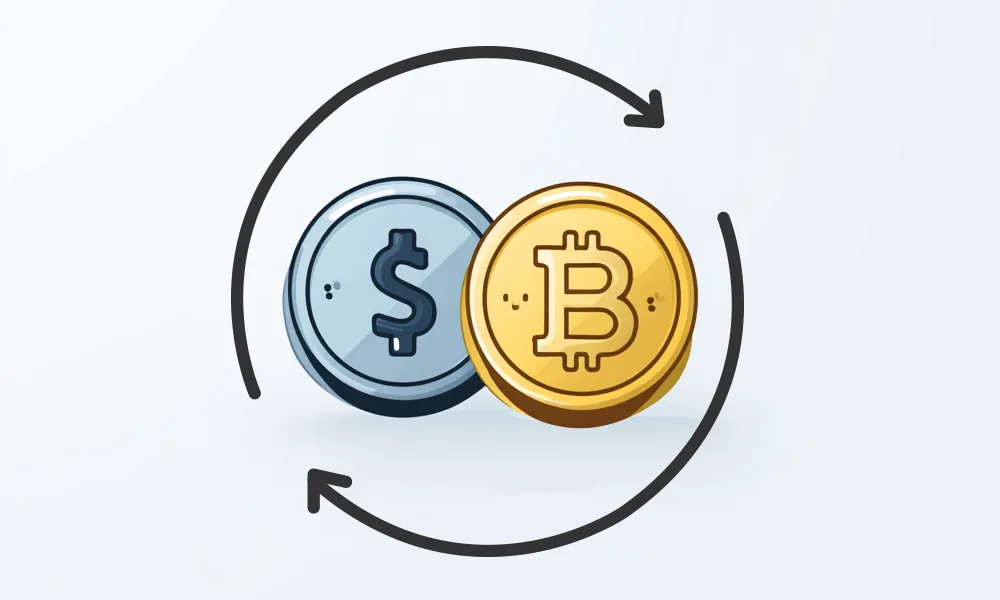
Exchange and Conversion Fees
Cryptocurrency-to-fiat or crypto-to-crypto conversions add another fee layer that’s often less transparent than network charges. Exchanges display fees as percentages (typically 0.1-1% for major platforms) but hide larger costs in bid-ask spreads—the difference between buy and sell prices at any moment.
Retail exchanges like Coinbase or Kraken show simple interfaces but charge 1-2% spreads plus 0.5-1% transaction fees. A $500 deposit requiring fiat-to-crypto conversion loses $10-15 before the transaction even reaches the blockchain. Professional platforms like Coinbase Pro or Kraken Pro reduce these costs to 0.1-0.5% through limit orders, but require understanding order books and market-maker versus taker dynamics.
Stablecoin usage eliminates conversion fees entirely if you maintain USDT or USDC holdings. Since stablecoins peg to USD, there’s no exchange rate risk or conversion spread. However, this shifts exposure to different risks: smart contract vulnerabilities, centralized reserve management, and regulatory concerns around stablecoin issuers. The fee savings must be weighed against these operational considerations.
Hidden Spread Costs in Market Orders
Market orders—buying or selling “at current price”—automatically accept the worst available rate within your order size. For a $500 market buy, you might receive fill at rates ranging from spot price to 0.5-1% above spot, depending on order book depth. This slippage is a hidden fee that doesn’t appear in transaction summaries but reduces the crypto amount received.
Limit orders eliminate slippage by specifying your exact price. Placing a limit order at current spot price means you only transact if the market comes to your level. During normal conditions, limit orders for amounts under $1,000 fill within minutes with zero slippage. The trade-off: if the market moves away, your order doesn’t fill—acceptable for planned deposits but problematic for urgent transactions.

Platform Withdrawal Fees and Policies
Poker sites handle withdrawal fees differently across platforms and cryptocurrencies. Some absorb network fees entirely, others charge fixed amounts per withdrawal, some implement dynamic fees based on current network conditions. Understanding each site’s specific model prevents surprises and enables optimization strategies.
Fixed-fee models charge the same amount regardless of withdrawal size or network conditions. A site charging 0.0005 BTC per withdrawal imposes the same cost whether you withdraw the minimum or maximum amount. This structure incentivizes fewer, larger withdrawals over frequent small ones. Withdrawing once weekly instead of daily reduces annual fee costs by 85% with identical total volume.
Dynamic fee models pass network costs to users at cost or with small markup. During low-congestion periods, withdrawals might cost $1-2. During network stress, the same withdrawal could cost $20-40. This model is fairer in terms of cost allocation but creates unpredictability. Professional players using dynamic-fee platforms time withdrawals during predictable low-activity windows to minimize costs.
Minimum Withdrawal Thresholds
Sites implement minimum withdrawal amounts to prevent economically irrational transactions where network fees exceed withdrawal value. A 0.001 BTC minimum (approximately $30-60 depending on market rates) prevents users from requesting $10 withdrawals that cost $15 in network fees. These thresholds create forced accumulation periods where funds remain on-site until reaching minimum levels.
Understanding minimum thresholds influences bankroll management strategy. If a site’s minimum is 0.002 BTC but you typically maintain 0.005 BTC on-site, you can withdraw 0.003 BTC and leave 0.002 BTC as permanent float, avoiding the minimum threshold constraint on future transactions. This reduces withdrawal frequency and associated costs while maintaining adequate on-site liquidity.
Deposit During Low-Congestion Window
Player needs to deposit funds for regular weekly session. Rather than depositing impulsively, checks network conditions and times the transaction for cost optimization.
- Current time: Thursday 3 PM UTC (moderate network activity, check mempool.space for real-time status)
- Mempool status: 25,000 pending transactions (moderate congestion, fees elevated above baseline)
- Next-block fee rate: 45 sat/vB (higher than typical 20-30 sat/vB during low activity)
- Session timing: Flexible—games run continuously, no specific time constraint
The Technical Process
Player delays deposit until late Thursday evening (10 PM UTC) when activity typically drops. Checks mempool again: 8,000 pending transactions, next-block rate 18 sat/vB. Sets custom fee at 20 sat/vB for high confidence next-block confirmation. Transaction broadcasts immediately, confirms in 8 minutes with first block, receives required confirmations within 20 minutes total.
The Outcome
Fee paid: 0.00004 BTC (approximately $1.20-2.00 at typical market rates, representing 0.4-0.8% of a $250 deposit). Had player deposited at 3 PM with 45 sat/vB rate, fee would have been 0.00009 BTC ($2.70-4.50, or 1.1-1.8% of deposit). Cost savings: $1.50-2.50 per transaction through timing optimization alone. Over 20 annual deposits, this represents $30-50 retained—one additional buy-in available for play through fee awareness.
How Professionals Handle Fee Management
Experienced crypto poker players treat fees as a controllable expense category requiring active management. They maintain separate hot and cold wallet allocations, time transactions during predictable low-fee periods, use limit orders for conversions, and batch transactions to minimize frequency-based costs.
Technical Risk Management
Professional players track their all-in fee rate across all transaction types. They calculate total fees paid (network + exchange + platform) divided by total volume moved to establish baseline efficiency. Target rates vary by transaction urgency and size, but experienced players typically achieve 0.8-1.5% all-in costs compared to 2.5-5% for users without fee awareness. This difference represents 1-3% of annual bankroll for active players.
Advanced players also monitor fee trends to predict optimization windows. When network congestion builds gradually, they accelerate planned withdrawals before fees spike. When volatility increases exchange spreads, they delay conversions until markets stabilize. This predictive approach requires more attention but generates measurable savings over passive fee acceptance.
System Optimization
Professionals use SegWit addresses for Bitcoin transactions, reducing fees by 30-40% through improved transaction efficiency. They avoid ERC-20 tokens during Ethereum congestion, switching to TRC-20 stablecoins on Tron network where fees remain consistently under $2 regardless of network state. They maintain accounts on multiple exchanges to access the best rates for each conversion, rather than accepting suboptimal spreads from a single platform.
Transaction batching provides another optimization layer. Instead of depositing $300 five times monthly (5x network fees), professionals deposit $1,500 once and manage bankroll through on-site balance. This reduces monthly network fee exposure by 80% with no change in total volume or risk profile.
Technical Evolution in Fee Structures
Current fee models create friction that second-layer solutions aim to eliminate. Bitcoin’s Lightning Network enables instant settlement with sub-cent fees by moving transactions off the main chain. Ethereum’s Layer 2 solutions (Arbitrum, Optimism, Polygon) reduce gas costs by 90-98% through rollup technology. As poker sites integrate these protocols, the fee landscape will shift dramatically.
Lightning adoption faces chicken-and-egg problems: sites won’t integrate until user demand exists, users won’t adopt until sites support it. However, exchanges like Kraken and Coinbase now offer Lightning withdrawals, creating infrastructure for poker site integration. Early adopters who understand Lightning channels and liquidity management will access near-zero fee deposits once site support materializes.
The long-term trend points toward fee compression across all layers. Network competition, Layer 2 scaling, and improved exchange efficiency will reduce total costs from current 1-5% ranges to 0.1-0.5% within 2-3 years. For players, this means continued attention to fee optimization provides diminishing absolute savings over time—but those who develop fee awareness now position themselves to capitalize on each improvement as it emerges.
Frequently Asked Questions
Why do network fees vary so much between transactions?
Network fees fluctuate based on transaction demand competing for limited block space. During high activity periods, users bid fees higher to achieve priority confirmation. During low activity, minimum fees confirm quickly. This creates fee ranges from $0.50-2 during quiet periods to $30-60+ during network stress. Timing transactions during low-congestion windows (weekends, late night UTC) reduces costs without sacrificing reliability.
Are exchange spreads really hidden fees?
Yes. Exchanges display transaction fees (0.1-1%) but often charge larger amounts through bid-ask spreads—the difference between buy and sell prices. Market orders automatically accept the worst available price within your order size, creating 0.5-2% hidden costs. Using limit orders at spot price eliminates spread costs entirely by specifying your exact execution price, though orders may not fill if the market moves away.
Should I use stablecoins to avoid conversion fees?
Stablecoins eliminate exchange rate risk and conversion spreads, saving 1-3% per transaction. However, they introduce smart contract risk (potential bugs in token code), counterparty risk (reliance on reserve management), and regulatory risk (government action against issuers). For players making frequent deposits, stablecoin savings often justify these risks. For occasional deposits, Bitcoin’s trust-minimized model may be preferable despite higher conversion costs.
How can I predict when fees will be lower?
Network activity follows predictable patterns. Fees typically drop during weekends (reduced business activity), late night UTC hours (2-6 AM when Asian, European, and American time zones have minimal overlap), and between major market events. Tools like mempool.space for Bitcoin or Etherscan gas tracker for Ethereum show real-time fee distributions. Monitoring these for a week reveals your specific usage pattern’s optimal windows.
Do withdrawal fees differ between cryptocurrencies?
Yes, significantly. Bitcoin withdrawals typically cost $2-10 in normal conditions, Ethereum $1-8 for ETH or $3-15 for tokens due to gas costs. Litecoin maintains $0.10-0.30 costs due to lower network usage. TRC-20 stablecoins on Tron network cost $0.50-1.50 consistently. Sites that charge fixed fees often set different rates per cryptocurrency reflecting these underlying network costs. Check fee schedules before choosing deposit/withdrawal cryptocurrency.
Is batching multiple small deposits into one large deposit worth it?
Absolutely. Network fees are per-transaction, not proportional to amount. Five $200 deposits pay 5x network fees, while one $1,000 deposit pays fees once. For users making 3-5 deposits monthly, batching reduces annual network fee costs by 60-80%. The trade-off: you must maintain sufficient hot wallet balance between deposits. Most professional players find this trade-off favorable, depositing larger amounts less frequently.