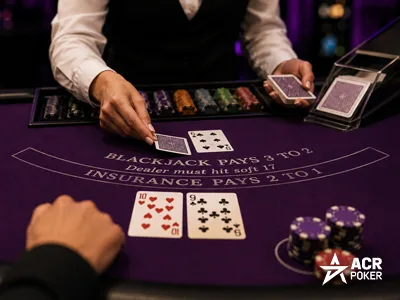



Dealer peek rules change blackjack risk because some losing spots are removed before players make deeper decisions
Basic strategy is built around fixed probabilities, but live dealer blackjack rules can slightly change how those probabilities feel in practice. Dealer peek is one of the most important rule details to check. In games where the dealer peeks for blackjack with an ace or 10-value upcard, the hand ends immediately if the dealer has a natural. That protects players from making extra doubles, splits, or larger decisions in a hand already lost to dealer blackjack.
That does not mean players should abandon basic strategy casually. Most deviations are small, rule-dependent and easy to overstate. The first adjustment is awareness: before sitting down, confirm whether the dealer peeks and whether the game uses European no-hole-card rules instead.
In no-hole-card games, the dealer may not check for blackjack before players act. That can make aggressive doubles and splits riskier because extra wagers may be exposed to a dealer natural.
The practical deviation comes in borderline high-risk spots against ace or 10 upcards. Under standard peek rules, a correct double or split remains cleaner because dealer blackjack has already been ruled out. Without peek protection, players should be more careful with plays that put extra money out before the dealer’s full hand is known.
Live dealer players also need to separate strategy from table rhythm. A slow dealer, chat pressure, or other players’ comments should not change the math. Rule structure is what matters.
If peek rules are favorable, stay close to basic strategy and avoid inventing fear-based folds. If the table uses no-hole-card rules, use a chart built for that format, not a generic blackjack chart pulled from memory.