



Crypto poker fees split into three distinct categories: network transaction fees paid to blockchain miners or validators, poker site processing fees, and exchange fees for acquiring cryptocurrency. Network fees are mandatory—every blockchain transaction requires compensation for validators who secure the network. Site fees are variable—some poker platforms charge deposit or withdrawal percentages while others absorb these costs. Exchange fees occur before poker deposits, when converting fiat currency to cryptocurrency.
Understanding fee structures matters because costs vary dramatically based on cryptocurrency selection, timing, and transaction size. A Bitcoin deposit during network congestion might cost $25-$50 in fees. The same deposit using USDT on Tron costs under $1. Ethereum deposits average $2-$5. These aren’t arbitrary differences—they reflect fundamental blockchain economics and network demand dynamics. Players who understand fee mechanics can reduce transaction costs by 70-90% through strategic cryptocurrency and timing selection.
This guide breaks down every fee type in crypto poker: what charges you actually pay, what determines fee amounts, how to minimize costs, and where players commonly overpay without realizing it. You’ll understand the technical and economic factors driving fees, enabling informed decisions about cryptocurrency selection, deposit timing, and transaction optimization.

Network Transaction Fees: The Mandatory Cost
Network fees compensate blockchain validators for including your transaction in a block. This cost is unavoidable—every on-chain cryptocurrency transaction requires network fees regardless of amount. Sending $50 or $5,000 of Bitcoin costs the same network fee because validators charge by transaction size in bytes, not dollar value. A typical Bitcoin transaction consumes 200-250 bytes, costing 1-100 sat/vB depending on network congestion.
Fee calculation differs by blockchain architecture. Bitcoin charges per byte—your wallet calculates transaction size based on inputs, outputs, and signatures, then multiplies by your chosen fee rate (satoshis per virtual byte). Ethereum charges per computational operation through gas—simple transfers cost 21,000 gas units, token transfers cost more due to smart contract execution. Gas prices fluctuate based on network demand, measured in Gwei (billionths of ETH).
Fee markets operate through priority auctions. When blockchain capacity exceeds transaction demand, minimum fees confirm quickly. When demand exceeds capacity, transactions compete for block space through fee bidding. Bitcoin’s mempool during congestion resembles an auction—higher fee transactions confirm first, lower fee transactions wait. This creates dynamic pricing: fees spike 10-50x during high activity, then drop to minimums during quiet periods.
The economic rationale: validators (miners or stakers) secure networks through capital investment and operational costs. Block rewards (newly minted cryptocurrency) provide baseline compensation, but transaction fees create direct pay-for-service markets. During Bitcoin’s eventual supply cap (21 million BTC), transaction fees will become the sole validator compensation, making fee markets fundamental to long-term network security.
Poker Site Processing Fees: The Variable Charge
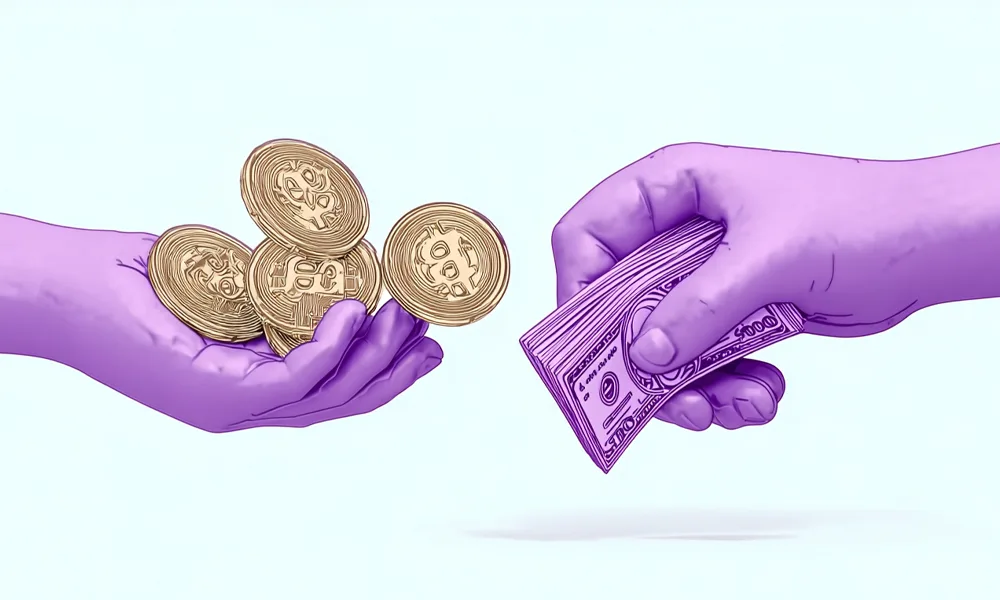
Poker sites implement three fee models for crypto transactions. Free processing: sites absorb all network costs, charging zero deposit or withdrawal fees. Percentage-based: sites charge 1-3% of transaction value plus network fees. Flat network pass-through: sites charge actual network costs without markup. The model determines total transaction cost and varies by site, cryptocurrency, and sometimes account tier or volume.
Free processing sites subsidize transaction costs through rake and tournament fees. This works economically because network fees represent small percentages of total player deposits. A site processing $10 million monthly in crypto deposits pays approximately $50,000-$100,000 in network fees (0.5-1% of volume). Recovering this through 2-5% rake on $200 million in monthly handle makes free crypto processing viable.
Percentage-based fees appear simple but create misaligned incentives. A 2% withdrawal fee on a $1,000 withdrawal equals $20—far exceeding typical network costs of $1-$5. This structure profits sites from withdrawal activity rather than gameplay. Players making frequent small withdrawals pay disproportionately higher effective fees than those making infrequent large withdrawals. The model favors sites over players in fee economics.
Network pass-through represents the fairest model—sites charge exactly what networks charge, without markup. Transparency is complete: you see actual Bitcoin network fees (currently 15 sat/vB = $3.50) and pay that amount. Sites profit from gameplay rather than transaction processing. This alignment creates better economics for high-volume players who make frequent deposits and withdrawals.

What This Means for Your Transaction Costs
Total crypto poker costs combine multiple fee layers. Example: depositing $500 to play poker. First, acquire cryptocurrency on an exchange—0.5% trading fee ($2.50). Second, withdraw from exchange to personal wallet—network fee ($2-$25 depending on cryptocurrency). Third, deposit from wallet to poker site—network fee again ($2-$25) plus potential site fee (0-2% = $0-$10). Total: $6.50-$62.50 depending on choices. Strategic selection reduces costs 80-90%.
Cryptocurrency selection creates the largest cost variance. Bitcoin during congestion: $25-$50 per transaction. Ethereum: $2-$5. Litecoin: $0.10-$0.50. USDT on Tron: under $1. The 50x cost difference reflects blockchain design choices—Bitcoin prioritizes decentralization and security over transaction cost, Tron prioritizes throughput and low fees over decentralization. Neither approach is universally superior; the optimal choice depends on your priorities.
Timing optimization reduces costs without changing cryptocurrencies. Bitcoin fees average 5-10 sat/vB during weekends and overnight UTC hours, rising to 50-100+ sat/vB during weekday peak times (US market hours). The 10-20x variance occurs predictably—transaction demand follows business cycles. Depositing during low-activity windows saves 80-90% on network fees without operational complexity.
Common Mistakes Players Make
- Using exchange wallets as poker deposit intermediaries, creating two unnecessary network fee transactions instead of direct exchange-to-site transfers
- Selecting maximum priority fees by default without checking network conditions, paying $15-$20 for transactions that would confirm in 15 minutes at $2-$3 cost
- Making frequent small withdrawals with percentage-based fees, paying $20 in fees per $100 withdrawal (20% effective rate) instead of consolidating to $20 fee on $1,000 (2% rate)
- Choosing Bitcoin for small deposits under $100, paying $5-$10 in network fees (5-10% of deposit) when stablecoins cost under $1 (under 1% of deposit)

Exchange Fees: The Hidden Pre-Poker Cost
Acquiring cryptocurrency before poker deposits creates the first fee layer. Centralized exchanges charge trading fees (0.1-1% per trade), deposit fees (0-5% for credit cards, free for bank transfers), and withdrawal fees (network pass-through or fixed amounts). Total acquisition cost: 0.5-6% of purchase amount depending on payment method and exchange. These costs occur before poker deposits but directly impact total poker funding economics.
Trading fee structures vary by exchange and volume tier. Coinbase: 0.5% for $10,000 monthly volume, declining to 0.04% at $1 billion volume. Kraken: 0.26% at low volumes, 0.10% at $50,000 monthly. Binance: 0.10% standard, 0.075% with BNB payment. The volume tiers create economies of scale—high-volume players pay 80-90% less per trade than occasional buyers. For poker players making monthly deposits, choosing lower-fee exchanges saves hundreds annually.
Payment method fees dwarf trading fees for small purchases. Credit card buys: 3-5% premium over spot price. Bank transfers (ACH): free but 3-5 day settlement delay. Wire transfers: $10-$30 flat fee, immediate. Debit cards: 2-3% fee, instant. The speed-cost tradeoff creates strategic choices—urgent deposits justify premium fees, planned deposits benefit from free bank transfers. Optimizing payment methods saves more than optimizing trading fees for most players.
Withdrawal fees from exchanges to personal wallets vary significantly. Coinbase: network cost plus 1% (approximately $3-$30 for Bitcoin). Kraken: network cost only ($2-$20). Binance: fixed amount (0.0005 BTC = $21.50 regardless of withdrawal size). The structural differences favor certain use patterns—Kraken benefits small frequent withdrawals, Binance favors large infrequent withdrawals. Understanding exchange fee structures enables cost optimization before poker deposits even begin.
Zero-Fee Illusions: What “Free” Actually Means
Poker sites advertising zero fees shift costs elsewhere in the ecosystem. Free deposits might include withdrawal fees. Zero withdrawal fees might be funded through higher rake percentages. Genuinely free processing exists but requires economic subsidization through gameplay revenue. Understanding cost allocation reveals whether “free” benefits players or simply obscures fee structures.
The economics of free processing: sites processing $10 million monthly in deposits pay $50,000-$100,000 in aggregate network fees (0.5-1% of volume). Distributing this cost across all players through slightly higher rake (0.1-0.2% increase) costs individual players less than direct transaction fees. The structure works because high-volume players subsidize occasional players, and rake applies to handled amounts (stakes played) rather than deposit amounts.
Hidden costs in “free” models include exchange rate spreads and processing delays. Sites converting cryptocurrency to USD equivalent at deposit confirmation might apply 0.5-1% adverse exchange rates compared to market mid-prices. Batched processing for “free” withdrawals might introduce 6-24 hour delays compared to immediate processing with fees. These implicit costs don’t appear as line-item fees but impact total player economics and experience.
The most transparent model: itemized fees showing exact network costs, exchange rates at market mid-prices, and zero hidden charges. This structure allows players to compare total costs accurately across sites and make informed decisions. When evaluating poker sites, calculate total roundtrip costs (deposit + withdrawal) including all implicit costs, not just advertised fee rates. Effective cost analysis reveals true economics.
Fee Optimization Strategies: Practical Cost Reduction
Systematic fee reduction combines cryptocurrency selection, timing optimization, and transaction batching. Strategy one: maintain dual cryptocurrency holdings—Bitcoin/Ethereum for large infrequent transactions (lower percentage cost despite high absolute fees), Litecoin/USDT for small frequent transactions (low absolute fees). This allocation minimizes total fees across different transaction patterns without sacrificing cryptocurrency preference.
Strategy two: schedule transactions during predictable low-fee periods. Bitcoin fees consistently drop 60-80% during weekend hours and overnight US time. Ethereum gas prices fall 40-60% during similar periods. Setting deposit schedules around low-fee windows rather than immediate needs reduces annual transaction costs significantly. For players depositing $500 monthly, timing optimization saves $150-$300 annually without changing cryptocurrencies.
Strategy three: consolidate transactions through batching. Instead of five $200 deposits (5x network fees), make one $1,000 deposit (1x network fee). For percentage-based withdrawal fees, batch small cashes to single larger withdrawals. Network fees scale with transaction complexity (number of inputs/outputs), not dollar value—consolidation creates fee efficiencies. The tradeoff: reduced flexibility versus lower costs per dollar transacted.
Strategy four: use SegWit addresses for Bitcoin transactions. SegWit (Segregated Witness) restructures transaction data, reducing transaction size by 30-40% without changing functionality. Lower transaction size means lower fees at identical fee rates (sat/vB). Address format: bc1 (native SegWit) instead of 1 or 3 (legacy). Most modern wallets default to SegWit, but verifying address format ensures fee optimization is active.
Real-World Cost Comparison: Four Deposit Scenarios
Player needs to deposit $500 to poker account. Comparing four approaches to understand total cost differences.
- Scenario A: Bitcoin during peak congestion—network fee 80 sat/vB = $18.50, site charges network pass-through, total deposit cost $18.50 (3.7% of deposit)
- Scenario B: Bitcoin during low activity—network fee 5 sat/vB = $1.15, site charges network pass-through, total deposit cost $1.15 (0.23% of deposit)
- Scenario C: Ethereum with moderate gas—21,000 gas at 25 Gwei = $2.80, site free processing, total deposit cost $2.80 (0.56% of deposit)
- Scenario D: USDT on Tron—network fee ~$0.50, site charges 1% deposit fee = $5.00, total deposit cost $5.50 (1.1% of deposit)
The Analysis
Scenario A represents worst-case: Bitcoin peak congestion with no timing optimization. Cost is 16x higher than Scenario B purely from timing difference—same cryptocurrency, same site, different network conditions. Scenario B demonstrates optimal Bitcoin usage: low-activity timing reduces fees by 94% compared to peak. Scenario C shows Ethereum’s middle ground: moderate absolute costs, fast confirmation, site fee absorption. Scenario D reveals percentage-based fee impact: despite lowest network cost ($0.50), site’s 1% fee dominates total expense.
The Lesson
Cryptocurrency selection matters less than fee structure understanding. Bitcoin during low activity ($1.15) beats Ethereum during peaks ($8-$12) and percentage-based sites using cheap networks ($5.50 site fee on $0.50 network cost). Optimal strategy: understand network conditions, choose appropriate cryptocurrencies for transaction sizes, and select sites with transparent network pass-through fees. This framework reduces fees by 70-90% compared to default choices.
How Professionals Manage Transaction Costs
Experienced crypto poker players treat transaction fees as portfolio management. They track effective fee rates (total fees divided by total volume) monthly, targeting under 0.5% across all transactions. They maintain spreadsheets logging deposit costs, withdrawal costs, and network conditions to identify optimization opportunities. This data-driven approach reveals patterns—certain cryptocurrencies or timing windows consistently outperform alternatives.
Technical Risk Management
Professionals balance fee minimization against operational risks. Ultra-low fees often mean slower confirmations—acceptable for scheduled deposits, problematic for time-sensitive tournament registration. They set fee policies by use case: priority fees for urgent deposits (accepting higher costs), economy fees for routine transfers (optimizing costs over speed). This segmentation prevents false economies where $10 fee savings causes missing a $100 tournament.
System Optimization
Advanced players use Replace-by-Fee (RBF) for Bitcoin transactions, allowing fee increases on pending transactions if network conditions change unexpectedly. They monitor mempool depth before deposits—when 50,000+ transactions are pending, they defer deposits or switch cryptocurrencies rather than competing in fee auctions. They also leverage exchange promotions (fee-free trading periods, withdrawal subsidies) to reduce acquisition costs before poker deposits begin.
Fee Structure Evolution and Future Trends
Current crypto poker fee structures reflect 2015-2023 blockchain technology—Layer 1 settlement with variable high costs. Lightning Network and Layer 2 solutions eliminate most fee variance through off-chain settlement. Bitcoin Lightning enables $0.001 transactions, regardless of network congestion. Ethereum rollups process transactions at $0.01-$0.10 flat rates. As poker sites integrate these technologies, fee optimization shifts from cryptocurrency selection and timing to protocol selection.
The transition creates temporary complexity—players need Lightning-capable wallets and Layer 2 understanding. However, the endpoint simplifies dramatically: all cryptocurrencies become effectively free to transact (under $0.10 per transaction), eliminating current fee management overhead. Selection criteria shift from “which cryptocurrency has low fees today” to “which cryptocurrency provides desired volatility exposure” (Bitcoin/ETH vs stablecoins) and philosophical alignment (decentralization vs convenience).
For players, the strategic implication: monitor poker sites for Layer 2 integration announcements and prioritize platforms implementing advanced scaling solutions. Early adoption requires technical learning but provides immediate fee savings and positions you advantageously as these technologies become standard. Fee optimization in 2024-2025 involves mastering current Layer 1 dynamics; fee optimization in 2026-2028 involves leveraging Layer 2 infrastructure as sites deploy it.
Frequently Asked Questions
Why do network fees fluctuate so dramatically for the same cryptocurrency?
Network fees operate through supply-demand dynamics. Blockchain capacity (transactions per block) is relatively fixed. Transaction demand varies based on market activity, time of day, and external events.
When demand exceeds capacity, users bid higher fees for priority inclusion. Bitcoin averages 5-10 sat/vB during low activity, spiking to 100+ sat/vB during high activity—a 10-20x variance. Ethereum gas follows similar patterns. Timing transactions during low-demand periods captures minimum fees without functionality sacrifice.
Can poker sites see how much I paid in network fees?
No. Network fees are paid directly to blockchain validators, not through poker sites. Sites see your deposit transaction on the blockchain but cannot determine what fee you paid—this information appears in different transaction fields.
Sites only know the amount you sent to their address. This opacity prevents sites from price-discriminating based on your fee tolerance but also prevents them from optimizing on your behalf.
Are percentage-based withdrawal fees ever better than fixed network fees?
Yes, for large withdrawals during high network congestion. Example: withdrawing $10,000 during Bitcoin congestion when network fees are $30. A 0.5% withdrawal fee costs $50, but includes guaranteed fast processing and site risk absorption if network fees spike higher.
Fixed network pass-through costs $30 but exposes you to confirmation delays and potential fee increases. For withdrawals under $5,000, network pass-through almost always costs less than percentage fees.
Do “free” crypto poker sites actually cost more overall?
Sometimes. Free transaction processing must be funded somewhere—either through higher rake, adverse exchange rates, or restricted withdrawal schedules.
Should I use Lightning Network or Layer 2 to minimize fees?
If available, yes. Lightning Network reduces Bitcoin transaction fees to under $0.01 with instant settlement. Ethereum Layer 2 networks charge $0.01-$0.10 with sub-5-second confirmation.
Both require different wallet infrastructure and introduce minor complexity. For players making frequent small deposits, the infrastructure investment pays off quickly. For occasional large deposits, traditional Layer 1 transactions remain simpler without meaningful cost disadvantage. Evaluate based on transaction frequency and technical comfort level.
How do I calculate the break-even point between different cryptocurrencies?
Compare total costs including acquisition, network fees, and time value.
Formula: (Exchange fee % + Network fee $) / Deposit amount = Effective fee %. Example: Bitcoin deposit during low activity: ($2.50 exchange fee on $500 + $1.15 network fee) / $500 = 0.73%. USDT deposit: ($2.50 exchange fee + $0.50 network fee + $5 site fee) / $500 = 1.6%. Bitcoin cheaper despite higher perceived costs.
Recalculate across your typical deposit sizes—break-even points shift with transaction amounts and network conditions.