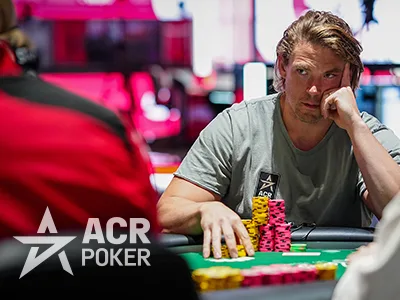



ESPN showed the shove, the table talk and the call. Alex Foxen gave ACR Poker the story behind a decision that had been building for hours. Foxen held A♠J♣. Vinh Nguyen had moved all-in for 67,100 chips with J♥10♥—nearly 56 big blinds—while ESPN’s cameras watched every second of the decision.
It was the kind of moment that looks simple after the cards are turned over. Foxen called with the better hand, an ace arrived on the turn and a pot of 142,500 chips moved in his direction. But Foxen was not looking at Nguyen’s cards when the decision had to be made. He was working with everything that had happened before the shove: Nguyen’s loose table image, the unusual betting sequence, the hands he had already shown and the conversation that unfolded while Foxen considered the call.
The broadcast captured the pressure. What it could not fully show was how Foxen combined hours of table history, the story Nguyen was trying to tell and one sudden change in his behavior. In a subsequent interview with ACR Poker, Foxen explained why the shove did not look as strong as it was supposed to—and how Nguyen’s reaction ultimately pushed him toward the call. The cards decided the pot. The information collected before the showdown decided the call.
A Call That Took Hours to Build

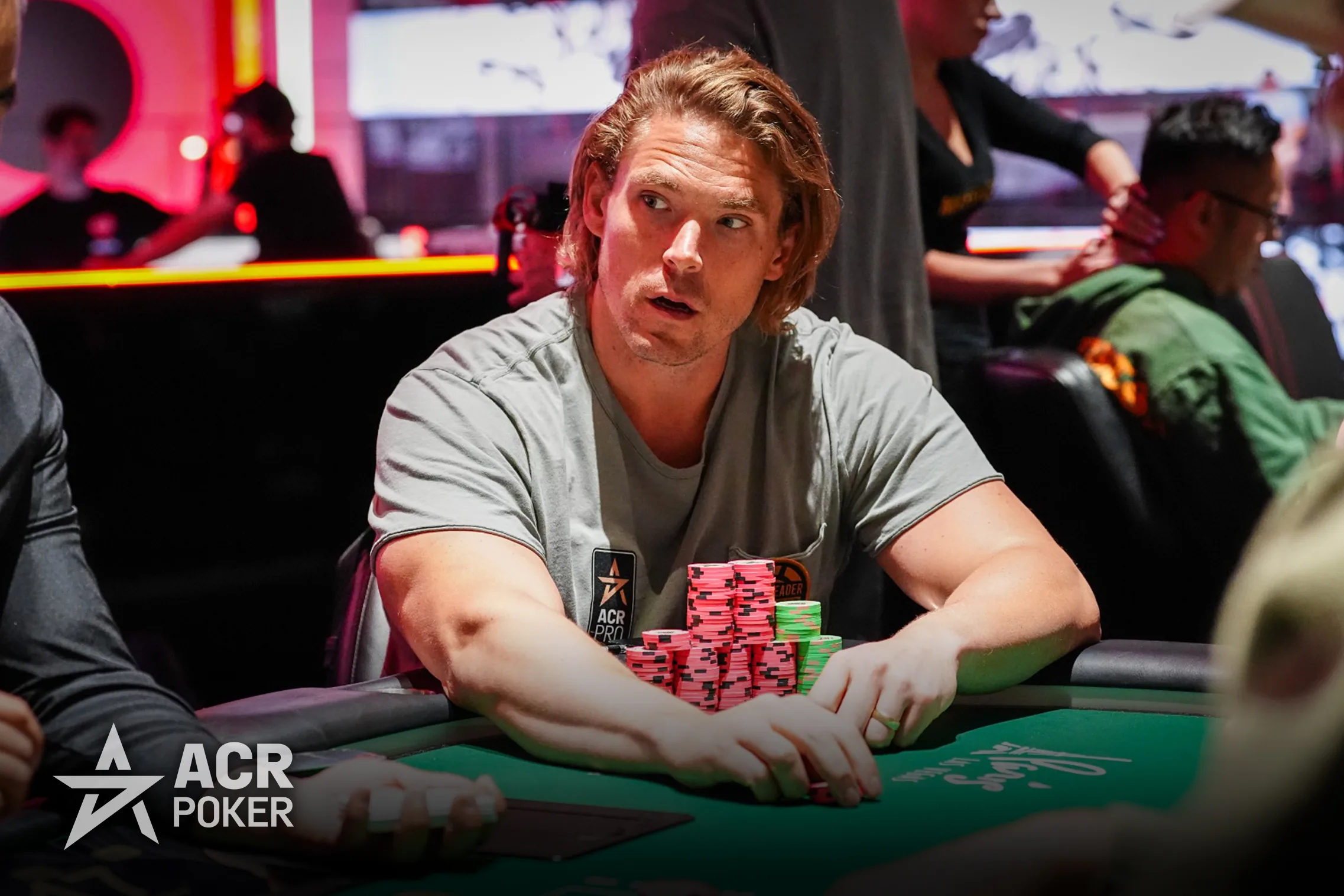
Nguyen opened to 2,700 with J♥10♥. Foxen called with A♠J♣. Yoshitaka Hayasaki then made a small three-bet to 6,500 from the big blind, and Nguyen responded by moving all-in for 67,100.
Foxen did not rush. He leaned back, watched Nguyen and listened as his opponent continued talking. The decision was for 64,400 more—more than half of Nguyen’s starting stack and a call that could change the direction of Foxen’s Main Event.
On television, the scene had everything: a huge shove, a talkative opponent and one of the game’s best players trying to decide whether the story made sense. What the screen could not show was the amount of information Foxen already had.
Nguyen had been at the table for hours. Foxen had watched him play, seen some of the hands he was willing to show and built a picture of how far he could push a situation. The call was not one sudden flash of instinct. It was the last step in a much longer process.
ESPN showed the pressure. Foxen gave ACR Poker the process.
Watch the Full ESPN Hand
The timing matters. Foxen does not snap-call. He asks questions, listens to the answers and gives Nguyen a chance to continue the story he has started telling.
After Foxen called and Hayasaki folded, the cards were turned over. Foxen’s A♠J♣ was ahead of Nguyen’s J♥10♥, but Nguyen still had plenty of ways to catch up.
The flop came 6♦ K♥ 5♣. Foxen’s ace-high remained in front. The A♥ on the turn paired Foxen, and the 6♠ river completed the board. Foxen won the 142,500-chip pot with aces and sixes, eliminating Nguyen and climbing to roughly 416,000 chips.
The result was good for Foxen. The more interesting part is why he was prepared to make the call before any community cards were dealt.
The Hand at a Glance
| Stage | Action | Cards / Board | What It Meant |
|---|---|---|---|
| Setup | Day 2D; blinds 600/1,200 with a 1,200 big blind ante | Foxen: A♠J♣ Nguyen: J♥10♥ |
Foxen began with 340,400; Nguyen had 67,100. |
| Open | Nguyen raises to 2,700 | J♥10♥ | A normal opening raise from a player Foxen had seen playing loose and splashy. |
| Call | Foxen calls 2,700 | A♠J♣ | Foxen keeps many playable hands in his range but is less likely to hold a monster. |
| Three-bet | Hayasaki reraises from the big blind to 6,500 | — | The small sizing makes the raise look less intimidating than a typical premium-hand three-bet. |
| Shove | Nguyen moves all-in for 67,100 | J♥10♥ | The shove puts maximum pressure on both opponents and can win the pot immediately. |
| Decision | Foxen calls; Hayasaki folds | A♠J♣ vs. J♥10♥ | Foxen combines the betting pattern, table history and Nguyen’s reaction. |
| Flop | 6♦ K♥ 5♣ | 6♦ K♥ 5♣ | Foxen’s ace-high stays ahead. |
| Turn | A♥ | 6♦ K♥ 5♣ A♥ | Foxen pairs his ace and becomes a commanding favorite. |
| River | 6♠ | 6♦ K♥ 5♣ A♥ 6♠ | Nguyen misses; Foxen finishes with aces and sixes. |
| Result | Foxen wins; Nguyen is eliminated | Final pot: 142,500 | Foxen moves to approximately 416,000 chips. |
Seen one action at a time, the hand becomes easier to follow. The opening raise is ordinary. Foxen’s call is ordinary. The small three-bet is the first unusual part. Nguyen’s all-in is the second.
Those two unusual actions fit together. The small three-bet leaves room for Nguyen to believe the big blind may not be especially strong. Foxen’s call also suggests that he probably does not hold aces, kings, queens or another premium hand.
Nguyen could therefore see a chance to win the pot without a flop. Foxen’s job was to decide whether the enormous shove represented real strength—or whether Nguyen had spotted the same opportunity.
The Information ESPN Couldn’t Show

The most important clue was not on the broadcast graphic. It came from the hours Foxen had already spent at the table with Nguyen.
Foxen described Nguyen as “loose and splashy.” He had seen enough unusual hands to know that Nguyen was capable of showing up with more than the standard premium holdings.
That did not prove Nguyen was bluffing. It simply meant Foxen could not treat the shove the same way he would treat an all-in from a player who had shown nothing but tight, predictable poker.
This is where table history helps. A player’s earlier actions do not give you the answer to the current hand. They tell you which answers are realistic.
For a common poker player, that is the first important lesson from the hand: do not let the size of a bet erase everything you have learned about the person making it. A big wager is important, but it does not arrive without context.
Foxen still respected the possibility of a strong hand. He simply left room for bluffs and weaker shoving hands because Nguyen’s previous play made them believable.
Why the Small Three-Bet Mattered

Hayasaki’s raise from 2,700 to 6,500 was unusually small for the situation. Foxen believed the sizing looked less like a carefully chosen raise with a huge hand and more like a raise that may not have been fully intentional.
Nguyen could see the same thing. If the big blind did not look extremely strong, the pot suddenly contained two targets: Foxen, who had only called the first raise, and Hayasaki, whose small three-bet might not be able to stand up to an all-in.
The shove offered Nguyen a simple route to winning the pot. Foxen would have to fold most of the hands he called with. Hayasaki would have to decide whether the small raise was worth defending for more than 50 big blinds.
This does not mean a large shove is automatically weak. Strong hands can move all-in too. The point is that the betting pattern gave Nguyen a clear reason to bluff.
Foxen was not asking, “Would someone ever shove jack-ten here?” He was asking, “Would this player see this exact setup as a chance to make both of us fold?”
Based on the previous hours, Foxen believed that answer could be yes.
What Foxen Meant by a “Capped” Range
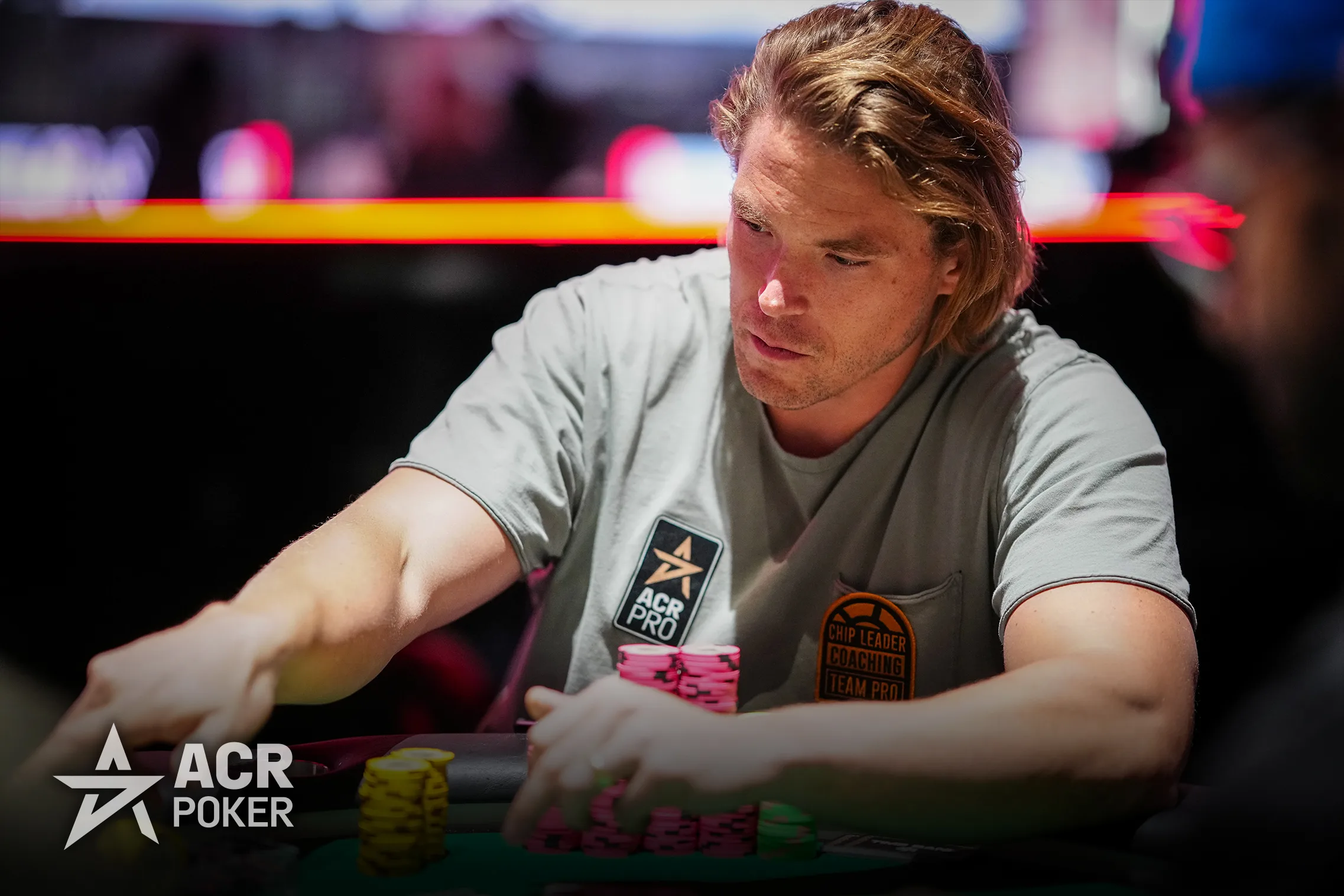
Poker players use the word “capped” to describe a range that can contain plenty of decent hands but very few monsters.
Foxen had only called Nguyen’s opening raise. With deep stacks, he would usually reraise hands such as pocket aces, pocket kings, pocket queens and many of his strongest ace combinations.
That meant Nguyen could look at Foxen’s call and reasonably believe the very top hands were mostly missing. Foxen could still have a medium pair, a suited hand, two big cards or a hand such as ace-jack. He just was not expected to have many hands that loved facing a 67,100-chip shove.
That is why the move was so attractive for Nguyen. Foxen had many hands that were good enough to enter the pot but not comfortable enough to call off nearly 56 big blinds.
The same logic also gave Foxen a reason to be suspicious. If Nguyen understood that both opponents looked limited, the all-in could be an attack on their weakness rather than a celebration of his own strength.
Foxen said pocket tens remained his biggest concern. Tens were strong enough to move all-in, vulnerable enough to want folds and far enough ahead of ace-jack to make calling expensive. Once Foxen reduced the number of premium hands he expected to see, however, the decision became much closer.
Why Ace-Jack Wasn’t an Easy Call
| Possible Hand Type | How A♠J♣ Performs | Why It Mattered |
|---|---|---|
| Premium pairs and stronger aces | Usually in serious trouble | Foxen needed reasons to reduce hands such as aces, kings, queens, ace-king and ace-queen. |
| Medium pairs, especially tens | Behind and facing a costly race | Pocket tens was the value hand Foxen remained most worried about. |
| Broadway bluffs and suited pressure hands | Often ahead | Hands such as jack-ten suited make sense when a player is attacking two apparently weak ranges. |
| Random weak hands | Well ahead | Nguyen’s loose image meant Foxen could not completely remove unconventional bluffs. |
Ace-jack looks attractive when the cards are first dealt. It looks much less comfortable after an opponent moves all-in for nearly 56 big blinds.
Against aces, kings, queens, ace-king or ace-queen, Foxen would be in poor shape. Against a medium pair such as pocket tens, he would usually need help from the board. The call only becomes appealing when Nguyen can also have enough weaker hands and bluffs.
That is why Foxen spent so much time narrowing the top of Nguyen’s range. He was not trying to prove that Nguyen had nothing. He was trying to work out how often the all-in represented a hand that ace-jack could beat.
The size of the shove made the decision uncomfortable, but it also made the bluff more effective. Nguyen was asking Foxen to fold almost every hand that was not a premium pair. If Nguyen believed Foxen would respond that way, the move could succeed with many hands that did not want a call.
Foxen’s decision came down to balance: were there enough believable bluffs to offset the strong hands that still remained? The table history, the strange sizing and the conversation gradually pushed that answer toward yes.
The Table Talk That Tipped the Scale
“It looked like he wanted to say something but didn’t know what to say. That very clearly screamed weakness to me.”
— Alex Foxen
Nguyen kept talking while Foxen considered the call. He said it was the best hand he had seen all day. Foxen challenged that claim by reminding him that another hand had already been shown.
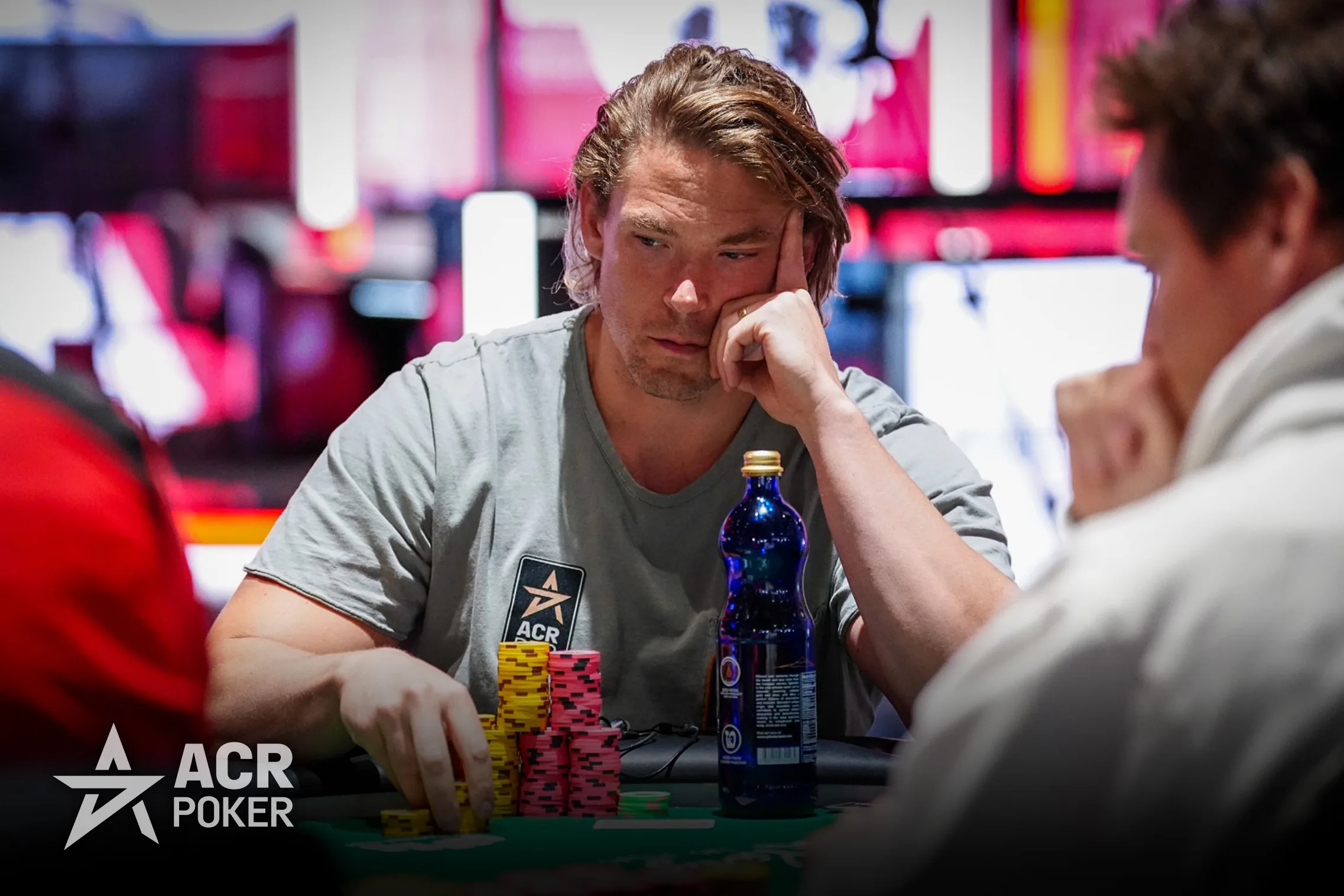
The exchange mattered because Nguyen had started the conversation. He had chosen to present a confident story. When Foxen questioned one part of it, Nguyen’s comfort appeared to change.
Foxen did not treat that reaction as automatic proof. Silence does not always mean weakness. Talking does not always mean strength. Different players behave differently.
What mattered was the change. Nguyen had been speaking freely, made a claim about his hand and then appeared less certain when Foxen pushed back. That shift supported what the betting action and table history were already suggesting.
The reaction did not create the call. It moved Foxen across the line after the other pieces had already brought him close.
More Than a Hero Call
| Betting Action | Table History | Range Logic | Live Reaction |
|---|---|---|---|
| The small three-bet created a target. | Nguyen had played loose and shown unusual hands. | Foxen and Hayasaki both looked less likely to hold monsters. | Nguyen became less comfortable when Foxen challenged his story. |
The phrase “hero call” makes the hand sound like one act of courage. Foxen’s explanation shows something more useful: the call was built in layers.
The stack and bet sizes told him how expensive the decision was. The previous hours told him what Nguyen was capable of doing. The betting pattern explained why a bluff could work. The conversation tested whether Nguyen’s story held together.
No single clue was enough. Remove the table history and the shove deserves more respect. Remove the small three-bet and the opportunity is less obvious. Remove Nguyen’s reaction and Foxen may remain close without finding the call.
The live read confirmed the poker analysis. It did not replace it.
That is the part worth remembering. The goal is not to search for a dramatic tell and then make a fearless call. The goal is to collect several small pieces of information and see whether they point in the same direction.
A Good Decision Can Still Lose
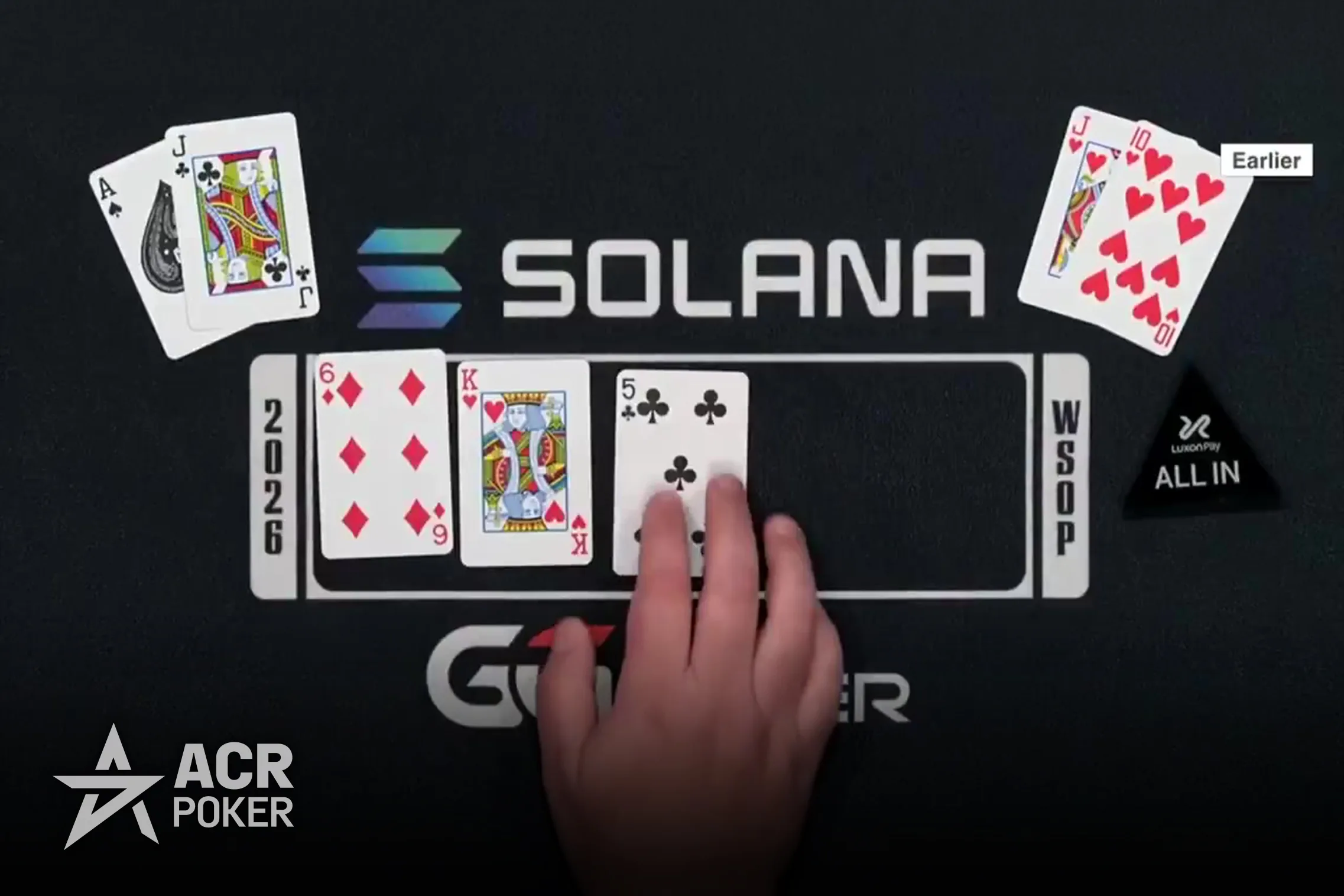
Foxen’s ace-jack stayed ahead on the flop and improved on the turn. That makes the highlight satisfying, but it can also hide an important poker truth: the quality of the call had to be judged before the dealer produced the board.
Nguyen could have paired a ten or made a heart flush. Foxen could have called correctly and still lost the pot. The opposite is also true: a weak call can get lucky and win.
Players often allow the result to rewrite the decision. When the river is kind, the call looks brilliant. When the river is cruel, the same call can suddenly look reckless. Neither reaction is especially useful.
Foxen’s explanation gives us a better way to judge the hand. Ask whether the information available at the time made calling better than folding. The final cards tell us who won. They do not tell us whether the choice was sound.
That separation is one of the hardest skills in poker. It is also one of the reasons elite players can keep making clear decisions after a bad beat or a failed bluff.
Why the Main Event Makes the Moment Bigger
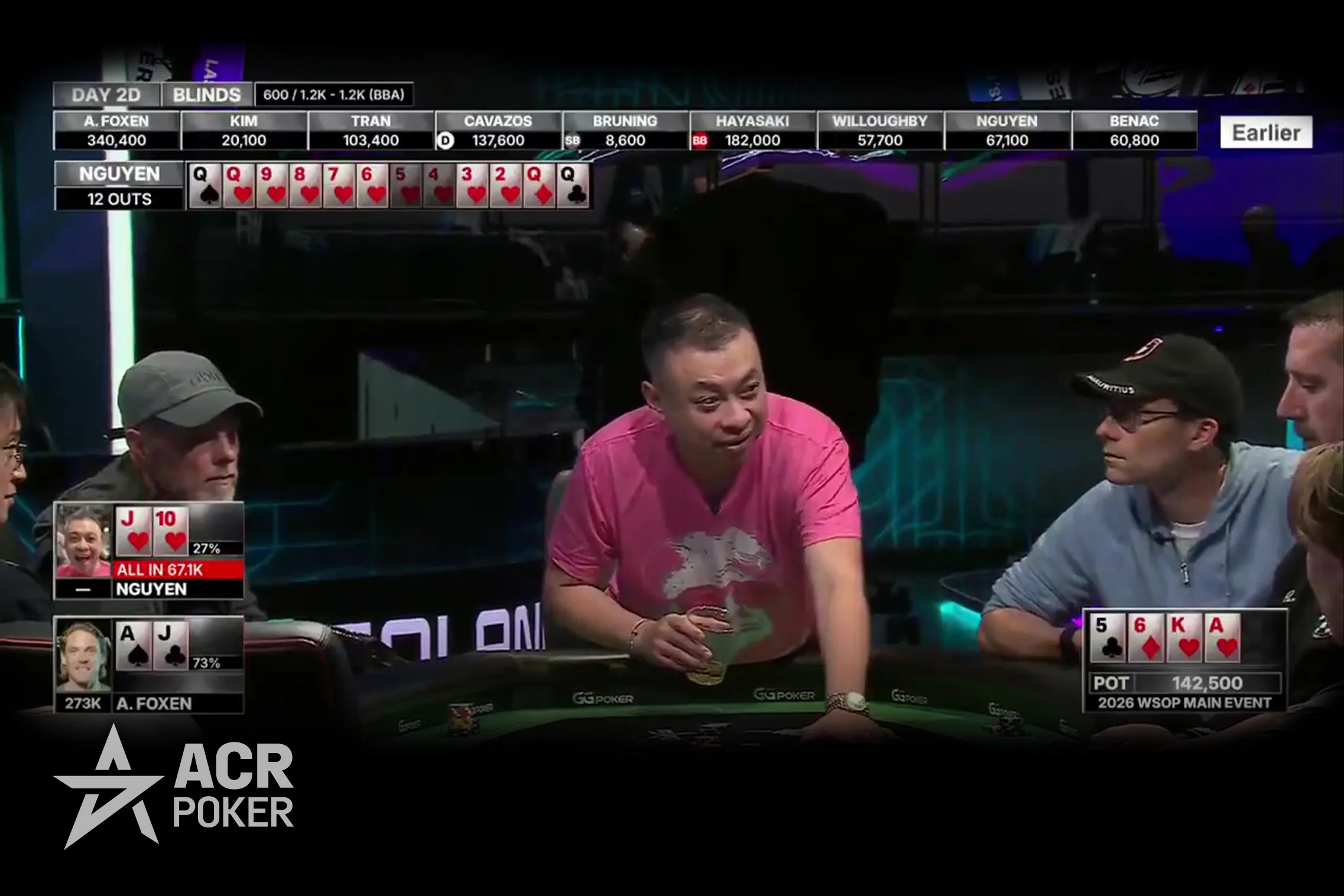
This was not a routine cash-game spot that could be replayed an hour later. It came on Day 2D of the WSOP Main Event, with thousands of players already eliminated and every surviving stack carrying the possibility of a deep run.
Nguyen’s shove threatened more than one pot. A wrong call would have removed a meaningful part of Foxen’s stack. A fold would preserve his tournament but surrender chips if Nguyen was attacking with a weaker hand.
The cameras added another layer, even if Foxen could not allow them to change the decision. Every pause, question and reaction was being recorded for a mainstream audience. The call would be replayed whether it worked or not.
That pressure helps explain why the hand connected with viewers. Everyone understands the feeling of being asked to make a big choice without complete information. Poker simply makes the uncertainty visible in chips, cards and time.
Foxen’s calm did not mean the decision was easy. It meant he had a process strong enough to use when the moment became uncomfortable.
Why ESPN Kept Coming Back to Foxen
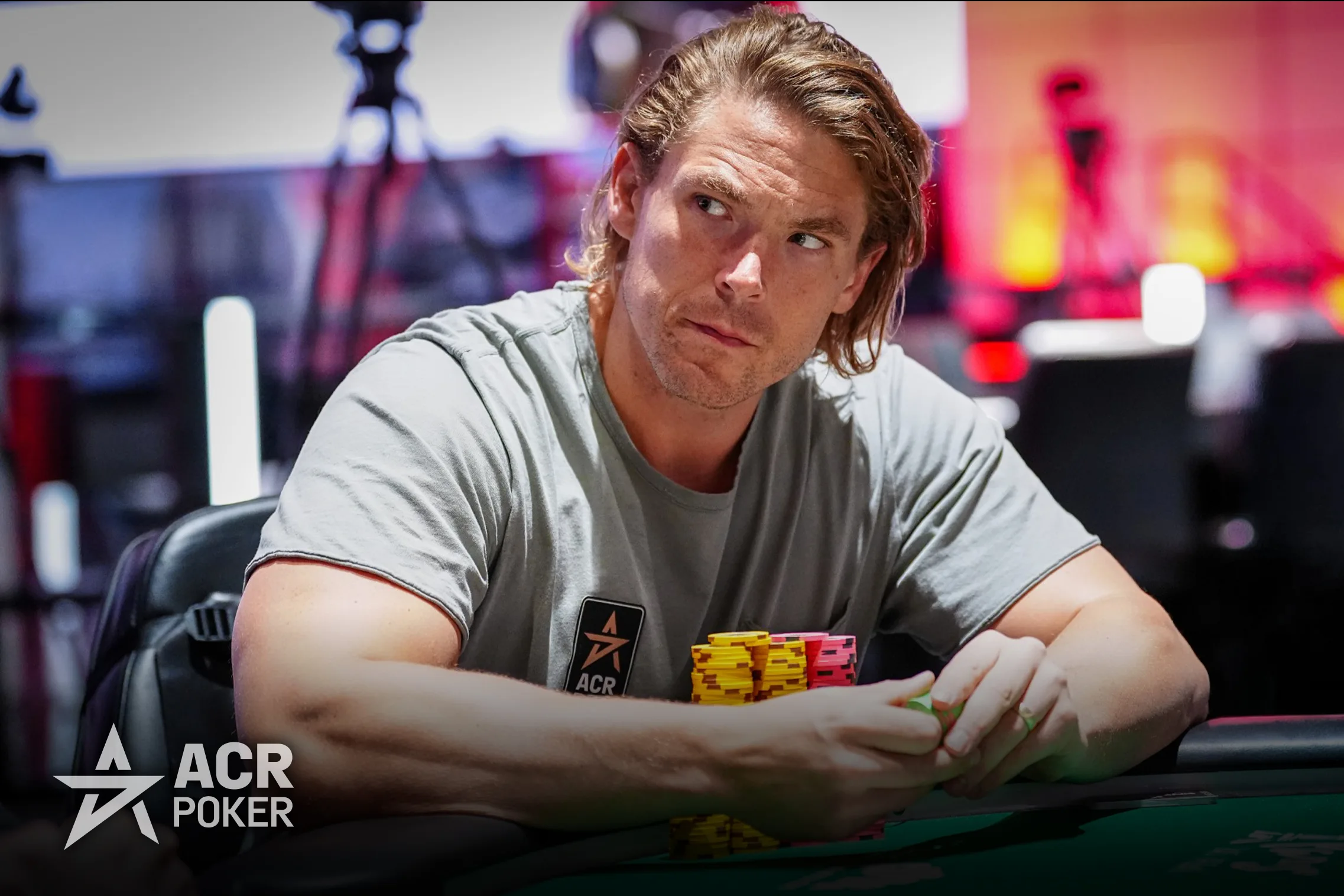
The Nguyen hand was not Foxen’s only appearance in the opening ESPN coverage. The cameras repeatedly returned to him at the feature table, followed his growing stack and later featured him away from the action while he explained expected value to the hosts.
That is a different kind of exposure. Many players appear on television because they happen to be involved in a pot. Foxen became part of the program’s wider story.
He gave ESPN several things at once: elite results, meaningful hands, visible concentration, natural table talk and the ability to explain a difficult idea without making it sound like a classroom lesson.
For ACR Poker, the patch was not simply visible in the background. It appeared because the player wearing it kept giving the broadcast a reason to come back.
Foxen joined the ACR Poker Pro team in May alongside Chance Kornuth and Chris Hunichen. His first summer representing the brand quickly placed him under ESPN’s brightest poker lights.
Foxen joined Team ACR Poker alongside Chance Kornuth and Chris Hunichen. Read the official ACR Poker announcement
The Summer Behind the Call
| Live Vegas Cashes 14 | Listed Payouts $2,067,005 | 2026 Bracelets 1 | Career Bracelets 4 |
The call came during an exceptional WSOP for Foxen. Before the Main Event, he had already won the $10,000 Super Turbo Bounty event for a listed payout of $594,246 and the fourth bracelet of his career.
He also reached major final tables in the $100,000 High Roller, the $25,000 PLO High Roller, the Heads-Up Championship and the $10,000 8-Game Mixed Championship.
Those results do not make the call correct by themselves. They do show the habits behind it: patience, attention to detail and a willingness to choose the uncomfortable option when the evidence supports it.
Foxen recorded 14 live Las Vegas bracelet-event cashes and $2,067,005 in listed payouts during the series. The Main Event added a 263rd-place finish and $50,000 to that total.
| Event | Event Start | Finish | Listed Payout |
|---|---|---|---|
| #97: $25,000 High Roller H.O.R.S.E. | Jul 13 | 10th | $60,789 |
| #96: $3,000 6-Handed PLO | Jul 12 | 75th | $6,335 |
| #94: $10,000 6-Handed NLH Championship | Jul 11 | 65th | $20,144 |
| #89: $3,000 Mid-Stakes Championship | Jul 8 | 372nd | $6,001 |
| #82: $10,000 Main Event | Jul 2 | 263rd | $50,000 |
| #80: $10,000 8-Game Mixed Championship | Jul 1 | 5th | $94,730 |
| #56: $3,000 6-Handed NLH | Jun 19 | 104th | $6,310 |
| #47: $25,000 PLO High Roller | Jun 15 | 7th | $267,993 |
| #44: $10,000 Super Turbo Bounty NLH | Jun 14 | 1st | $594,246 |
| #36: $100,000 NLH High Roller | Jun 10 | 6th | $522,347 |
| #28: $600 Mixed NLH/PLO Deepstack | Jun 8 | 5th | $55,305 |
| #24: $25,000 6-Handed NLH High Roller | Jun 6 | 32nd | $50,207 |
| #17: $10,000 2-7 Lowball Championship | Jun 2 | 11th | $32,598 |
| #7: $25,000 Heads-Up Championship | May 29 | 4th | $300,000 |
Five Things Regular Players Can Take From the Hand
| Takeaway | How to Use It |
|---|---|
| Start with the betting | Before looking for a tell, note the stacks, positions and sizes. Ask what hands each player can realistically represent. |
| Use history to adjust | A loose image creates more possible bluffs. It does not guarantee the current bet is a bluff. |
| Notice changes | A change from a player’s normal rhythm is often more useful than a universal rule about eye contact or talking. |
| Test the story | Compare what the player says with the betting line. The two should make sense together. |
| Judge the decision first | A good call can lose and a bad call can win. Evaluate the reasoning before looking at the board. |
The wrong lesson is to start hunting for chances to copy Foxen’s call. Most players will lose money if they use one bit of table talk as permission to call huge bets.
The useful lesson is the order of the work. Foxen began with the action. He added the previous hours. He considered the strongest hands that still made sense. He then used the conversation to test the picture he had already built.
The lesson is not to trust your gut blindly. It is to give instinct a factual foundation.
The Thinking Behind the Television Moment
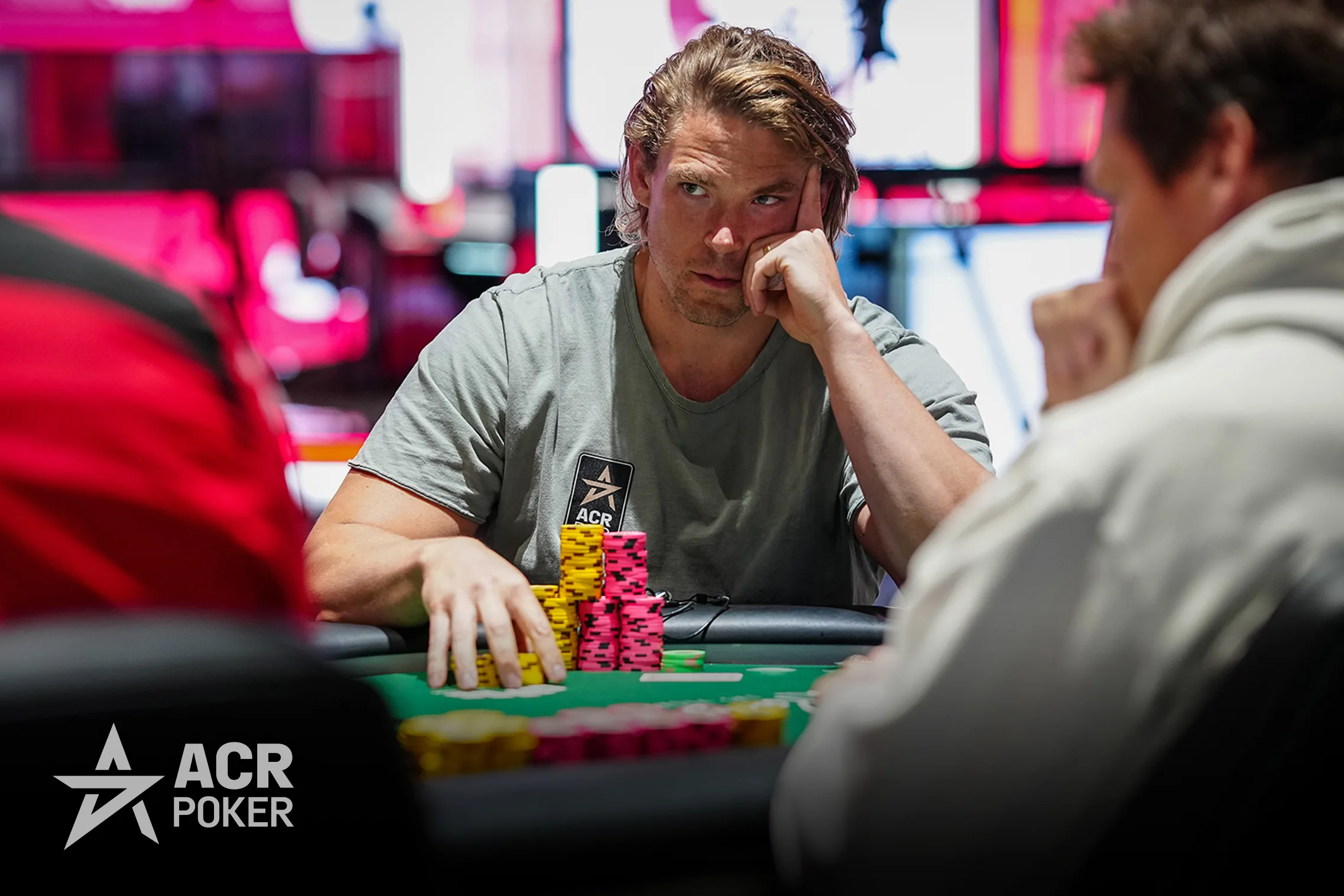
The ESPN clip works because the drama is easy to understand. One player has moved all-in. Another is trying to decide whether he is being told the truth.
Foxen’s explanation gives the moment staying power. He did not discover a magic tell. He did not ignore the size of the shove. He did not call simply because Nguyen had been active.
He built the decision from the betting action, the previous hours and the change he saw when Nguyen’s story was challenged. Each piece mattered because the others were already in place.
That is why the call becomes more interesting after the explanation. Television showed an elite player making a brave decision. The interview showed an elite player turning incomplete information into a choice he could defend.
Foxen’s ACR Poker patch was visible throughout the sequence, but the value came from what he did while wearing it. He created a moment ESPN wanted to show—and then gave ACR Poker readers the thinking the broadcast could not fully include.
The television coverage showed the call. Foxen gave us the thinking behind it.
Learn more about Alex Foxen, meet the complete ACR Poker Pro team and follow ACR Poker News for more coverage from poker’s biggest stages.