


Wallet selection for online poker is not primarily a convenience decision—it is a security and custody decision. The wallet you use determines who controls your private keys, what attack vectors your funds are exposed to, and how friction-free your deposit and withdrawal workflow will be. Each wallet type represents a different position on the trade-off between accessibility and security, and no single model is optimal for every player or every fund allocation.
The distinction that matters most is custody: custodial wallets hold your keys on your behalf, while self-custody wallets give you direct key control. This choice has operational consequences beyond security—it affects your ability to access funds, your exposure to platform risk, and your transaction privacy. Understanding these differences at a technical level allows you to match wallet architecture to your actual playing patterns and risk profile.
This guide breaks down the four primary wallet types relevant to crypto poker players—exchange wallets, software wallets, hardware wallets, and multi-signature setups—explains the security model behind each, and outlines how experienced players allocate funds across them.
The Custody Framework: What Wallet Type Actually Means
Every cryptocurrency wallet is fundamentally a key management system. The wallet does not hold your crypto—the blockchain does. What the wallet holds (or manages access to) is the private key that authorizes transactions from your address. Whoever controls the private key controls the funds.
Custodial wallets delegate key management to a third party. The operator holds the keys; you hold a claim against their balance. Non-custodial (self-custody) wallets keep keys under your direct control. The security model inverts accordingly: custodial wallets expose you to platform risk (exchange hacks, insolvency, account freezes); self-custody wallets expose you to operational risk (key loss, device compromise, user error).
For poker players, this framework has practical implications. Funds on an exchange or poker site are custodial by default—you are trusting the platform. Funds in a self-custody wallet are yours until you send them. The correct approach is almost always a hybrid: different wallet types for different fund tiers and use cases.
Exchange and Custodial Wallets: Convenience With Platform Risk
Exchange wallets (Coinbase, Binance, Kraken, and similar) are custodial by design. You authenticate with a username and password; the exchange manages the private keys. This model offers genuine convenience: instant internal transfers, integrated fiat on/off ramps, and no key management responsibility.
The trade-offs are significant. Exchange wallets introduce counterparty risk—your funds are only as secure as the exchange’s operational and financial health. Historical exchange failures (including insolvencies and hacks affecting billions in user funds) demonstrate that this risk is not theoretical. Regulatory seizures and account freezes are additional vectors that do not exist with self-custody.
For poker players, exchange wallets are most appropriate as a temporary staging area: purchase crypto, transfer to self-custody or directly to the poker site, and minimize the balance held on exchange at any time. Maintaining large exchange balances for convenience is a risk management error.
Common Mistakes With Exchange Wallets
- Treating exchange balance as equivalent to self-custody—it is a claim, not direct ownership
- Reusing exchange deposit addresses across multiple transactions, reducing privacy
- Holding poker winnings on exchange for extended periods rather than withdrawing to self-custody
- Assuming two-factor authentication makes exchange accounts as secure as hardware wallets—it does not; it only reduces unauthorized access risk, not platform risk
Software Wallets: Self-Custody With Active Attack Surface
Software wallets (desktop or mobile applications like Exodus, Electrum, Trust Wallet, MetaMask) generate and store private keys on your device. This is genuine self-custody—no third party holds your keys. The seed phrase (12 or 24 words) generated at setup is the master key from which all addresses and private keys are derived. Anyone with the seed phrase controls all funds in that wallet.
The security trade-off is device exposure. A software wallet’s private key resides on an internet-connected device, creating an attack surface for malware, keyloggers, clipboard hijackers, and phishing. A compromised device means compromised keys. This attack surface is manageable but requires ongoing vigilance: keeping software updated, using dedicated devices where possible, and never storing seed phrases digitally.
Software wallets are well-suited for active poker bankroll management—funds you need to access regularly for deposits and withdrawals. They offer full custody without the confirmation overhead of hardware wallets for routine transactions. The appropriate balance level is a function of your personal risk tolerance and the realistic cost of device compromise.
Seed Phrase Security: The Non-Negotiable
The seed phrase is the single point of failure for software wallets. Standard operational security requires: writing it on paper (never digitally), storing the paper copy in a physically secure location (preferably two separate locations), and never entering it into any website or application except the original wallet software during recovery. Seed phrase theft is the primary attack vector against software wallet users—social engineering and fake recovery prompts are common.
Hardware Wallets: Offline Key Storage for Larger Balances
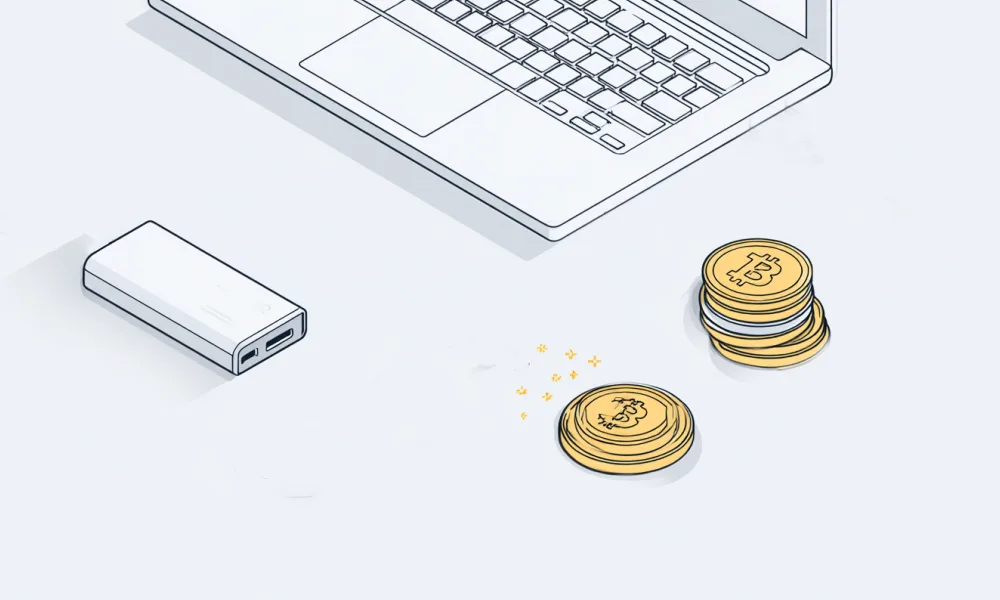
Hardware wallets (Ledger, Trezor, Coldcard) store private keys in a dedicated offline secure element. The keys never leave the device and are never exposed to internet-connected systems. Transactions are signed inside the hardware device and broadcast without exposing the key. This architecture eliminates the malware attack vector that affects software wallets.
The security model is substantially stronger than software wallets, but the operational model is different. Hardware wallets introduce friction: physical device required for each transaction, PIN entry, and physical confirmation of transaction details. For players making frequent small deposits, this friction is a genuine operational cost. For players managing larger bankroll allocations between sessions, hardware wallets represent the appropriate security tier.
Hardware wallets do not eliminate all risk. Physical theft of the device combined with PIN compromise, supply chain attacks (purchasing from unofficial sources), and seed phrase exposure during initial setup remain valid attack vectors. The device protects against remote attacks; physical security and seed phrase hygiene address the remaining vectors.
| Wallet Type | Custody Model | Key Storage | Primary Risk | Best Use Case for Poker |
|---|---|---|---|---|
| Exchange Wallet | Custodial | Platform-controlled | Platform insolvency, hack, freeze | Temporary staging for crypto purchases |
| Software Wallet | Self-custody | Device encrypted storage | Malware, device compromise | Active poker bankroll (regular deposits) |
| Hardware Wallet | Self-custody | Offline secure element | Physical theft, seed exposure | Long-term storage, large balance reserves |
| Multi-Sig Wallet | Self-custody | Distributed keys (2-of-3+) | Key coordination complexity | High-value bankrolls requiring maximum security |
Multi-Signature Wallets: Distributed Control for Maximum Security
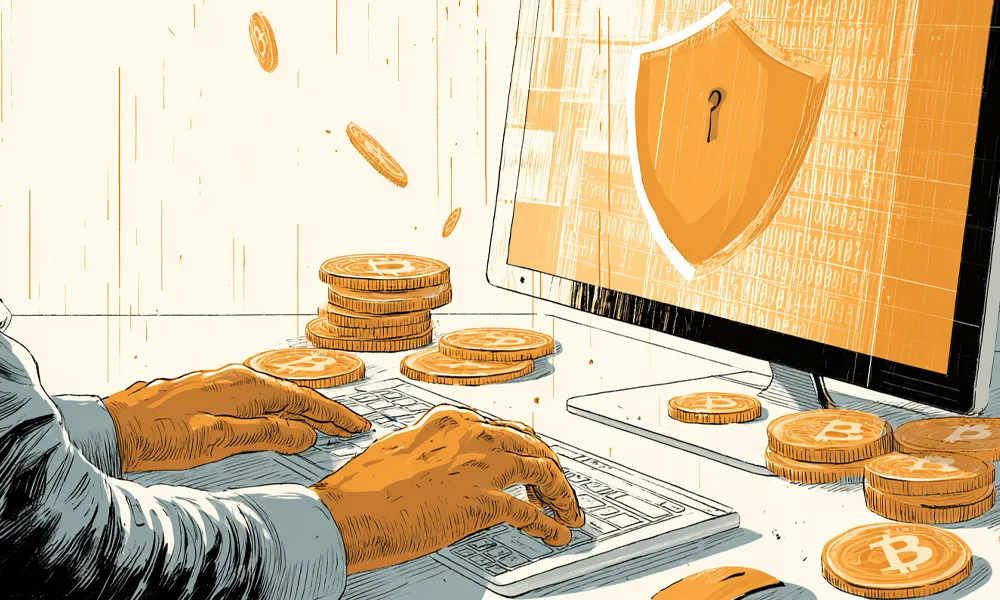
Multi-signature (multi-sig) wallets require multiple private key signatures to authorize a transaction. A 2-of-3 setup means any two of three designated keys must sign—no single key compromise can move funds. Keys can be distributed across devices, locations, or individuals, eliminating single points of failure.
Multi-sig is the highest security tier available for self-custody but introduces operational complexity that makes it unsuitable for frequent transactions. Setting up and using a 2-of-3 multi-sig wallet requires technical competence; transaction signing requires coordinating multiple devices or parties. Recovery scenarios (lost key) add further complexity.
For poker players, multi-sig is relevant when bankroll holdings reach a level where single-key compromise would represent a loss that exceeds your operational risk tolerance. This threshold is personal—it reflects both absolute value and your confidence in single-key operational security. Players who have demonstrated consistent seed phrase hygiene with hardware wallets may not need multi-sig; players managing large crypto reserves across extended periods may find the additional protection worth the operational overhead.
Operational Scenario: Three-Tier Wallet Architecture
A player manages an active crypto poker bankroll with occasional large withdrawals. They implement a three-tier wallet structure to match security level to fund purpose:
- Tier 1 — Software wallet (hot): Holds 10–15% of total bankroll. Used for all deposits to ACR Poker and for receiving withdrawals. Funded from hardware wallet on a weekly schedule. Risk exposure is intentionally limited to this tier.
- Tier 2 — Hardware wallet (warm): Holds 60–70% of total bankroll. Receives withdrawals from poker site via software wallet transfer. Refills the software wallet on schedule. Physical device stored securely at home; seed phrase stored separately off-site.
- Tier 3 — Hardware wallet (cold, secondary device): Holds 20–30% of total bankroll as long-term reserve. Transactions initiated only quarterly for rebalancing. Seed phrase stored in separate physical location from Tier 2 seed phrase.
This architecture limits malware exposure to the Tier 1 balance, protects the majority of funds behind hardware-level security, and maintains a reserve that requires deliberate physical action to access. The operational overhead is approximately 15–20 minutes per week for scheduled refills and rebalancing checks.
How Professionals Approach Wallet Selection
Experienced crypto poker players do not choose one wallet type—they design a system where each wallet type handles a specific function. The decision criteria are: frequency of access, balance at risk, and acceptable operational overhead.
Matching Wallet to Function
Frequent-access funds (session buy-ins, tournament entries) belong in a software wallet where transaction speed matters more than maximum security. Medium-term holdings (session winnings, monthly bankroll) belong in hardware wallet custody where attack surface is minimized without excessive friction. Long-term reserves (multi-month bankroll, significant accumulated winnings) warrant hardware wallets with carefully managed seed phrase storage, potentially multi-sig for larger amounts.
Withdrawal Routing
Professional players never withdraw directly from a poker site to cold storage. They withdraw to a software wallet first, verify the amount and transaction, then transfer to hardware wallet storage during a scheduled consolidation window. This two-step process catches errors before funds reach long-term storage and maintains a clean separation between active and reserve tiers.
Wallet Security and the Evolving Protocol Landscape
Wallet technology is evolving alongside broader blockchain infrastructure. Account abstraction (ERC-4337 on Ethereum) enables smart contract wallets with programmable recovery mechanisms, reducing the catastrophic consequences of seed phrase loss without requiring third-party custody. Hardware wallet manufacturers are improving multi-device coordination for multi-sig, reducing the operational complexity that currently limits adoption.
For poker players, these developments mean the binary choice between custodial convenience and self-custody friction is narrowing. Social recovery wallets (where trusted contacts can assist in key recovery without holding keys themselves) may become viable for mainstream use within the current development cycle. Players building wallet infrastructure now should understand these trends without over-weighting them—current hardware wallet technology provides adequate security for all but the most demanding use cases.
Frequently Asked Questions
Do I need a self-custody wallet to play crypto poker?
No—you can deposit directly from an exchange wallet. However, exchange custody means you don’t control your private keys. For amounts beyond active session funds, self-custody is the appropriate model. Exchange wallets are suitable as a temporary staging area for purchasing and sending crypto, not for holding poker bankroll reserves.
What happens if I lose my hardware wallet device?
The device itself is not the wallet—the seed phrase is. A lost or damaged hardware wallet device can be fully recovered by entering your seed phrase into a new device of the same type (or a compatible wallet). This is why seed phrase storage is more critical than device security. Without the seed phrase, a lost device means permanent loss of funds.
Is a software wallet safe enough for poker deposits?
For active session funds, yes—provided the device running the wallet is reasonably secure (updated OS, no unknown software, no shared use). The risk scales with balance. A software wallet holding one session’s buy-in represents an acceptable risk profile for most players. The same wallet holding six months of bankroll is a different risk calculation entirely.
Can I use the same wallet address for every deposit?
Technically yes, but address reuse reduces transaction privacy. On Bitcoin, reusing addresses allows blockchain analytics to link all deposits to a single identity. Most modern wallets generate a new address for each transaction by default (HD wallet architecture). Using fresh addresses for each deposit is standard practice for players who want to limit on-chain traceability of their poker activity.
What is the difference between a hot wallet and a cold wallet?
Hot wallets are connected to the internet (software wallets, exchange wallets)—accessible instantly but exposed to remote attack vectors. Cold wallets have keys stored offline (hardware wallets, paper wallets)—not accessible without physical interaction, eliminating remote attack risk. The temperature terminology describes internet connectivity, not security model in general. A hardware wallet used daily is warm; one used quarterly for reserve management is cold.
Do poker sites support all wallet types for deposits?
Poker sites accept deposits from any valid wallet address—they cannot distinguish wallet type at the protocol level. What matters is the network and currency compatibility. A deposit sent from a hardware wallet looks identical on-chain to one sent from a software wallet or exchange. Always verify the correct network (BTC, ETH, TRC20, etc.) before sending from any wallet type to avoid irrecoverable loss.